The post Sport Psychology for Football appeared first on InnerDrive Dev1.
]]>What is sport psychology?
Sport psychology helps footballers train with more focus, play with more confidence, and reflect more effectively after a match. This helps them maintain their motivation, resilience, emotional control and overall well-being. Sport psychologists can also help footballers cope with the stress and frustration of injury and transition back into playing after an injury has occurred.
Sport psychology can be the difference that makes the difference.
Match day performance is a combination of technical, tactical, physical and mental performance. Here’s an experiment: think of your best and your worst game. Now, assign percentages to each of the four areas to explain the difference in performance between the two games. You will probably have allocated a significant proportion of the difference to your mental game, but how much work and training do you put into it compared to the other three areas?
Footballers at the top of their game recognise that a football sport psychologist can help them improve on their weaknesses and further develops their strengths. The very best footballers leave no stone unturned in their quest for success and a sport psychologist can help them do this. With an ever-increasing pressure to perform, working with someone to maximise the mental side of the game is quickly becoming essential for the best footballers.
Useful Resources

What is sport psychology? – Sport Psychology today


Our Sport Psychology videos

The secret to success
What does a football sport psychologist do?
A football sport psychologist can help footballers of all levels become the best player they can be. A football sport psychologist works in two main ways;
- The first is when a player asks for help with something they are struggling with; for example, some footballers may be struggling with a lack of confidence or poor self-discipline on the pitch.
- Other players work with a football psychologist to improve their overall performance. Whilst they may not have a specific problem, they recognise that their mindset is such an important part of being a great footballer that it needs to be worked on and coached just as much as the other aspects of their game.
The key to getting better isn’t doing one thing 100% better, but finding one hundred things to do 1% better.
The job of a sport psychologist in football is to help you become a more complete player on and off the pitch. Not only can a football sport psychologist help you with the strategies and mental skills to perform to your very best while playing, but they can also help you prepare better off the pitch by helping you become a student of the game.
Useful Resources

Sport psychology and the pressure of knockout football

Sport Psychologist football

Why football is a pressure cooker for mental health issues – The Telegraph
How does sport psychology apply to football?
Having the right mindset in football and the ability to perform under pressure is vitally important. As Andrea Pirlo once said: “Football is played with your head. Your feet are just tools”. It therefore makes sense to train your way of thinking so you can really maximise your performances.
Football psychology makes a big difference. You can’t play at your best if you are not confident, focused and mentally tough.
The best footballers play at their best consistently by keeping their emotions in check, thinking clearly and making the right decisions. Above all, they are motivated to improve and thrive in pressure situations. Big players put in big performances in big matches. It is interesting to consider that, despite being so important, not many players invest that much time in training this area of their game. That’s where a football psychologist can help.
Useful Resources
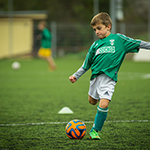
The pressure on youth footballers

Playing brilliant football: a sport psychologist's guide

How footballers use sport psychology – The Telegraph
How can a sport psychologist help me play better football?
Performing Under Pressure
A football sport psychologist can help you perform better during matches by improving your:
- Confidence – Knowing what to think about before and during a match;
- Concentration – Blocking out distractions and focusing on whats important;
- Intensity – Playing at your best for the duration of a match;
- Decision Making – Being able to make the correct decisions quickly and clearly;
- Consistency – Playing to your best in training and matches.
World class footballers consistently improve and play their best when it really matters.
All round development
As well as playing your best when the pressure is on, a football sport psychologist can help you develop all round by improving your:
- Motivation – Having the drive to train at your best;
- Coping skills – The ability to bounce back from setbacks and poor performance;
- Learning – Learning from your performances to improve for next time;
- Attention – Having a clear focus on what is important to improve and play better football;
- Leadership and playing with others – Effective communication with other teammates.
Useful Resources
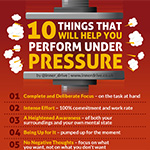
How to perform under pressure
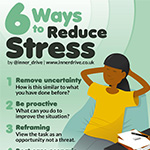
6 ways to reduce stress
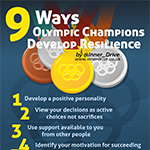
9 ways Olympians develop resilience
How can a sport psychologist help my football team?
The most successful football teams are those that have a well-functioning squad. Traditionally, sport psychologists work with football teams in three main areas:
- They work with individual players in the team to raise their personal performance;
- They work with groups of players in the team to make sure that they are working effectively as a unit;
- They work with management and coaching staff to help create a great environment and ensure that their feedback and leadership are as effective as possible.
Individual talent might win games, but teams win trophies. Creating the right environment in the team is key for this.
There are a variety of ways that football psychologists help within the team environment. We draw on our experience and knowledge of psychology to help teams that we work with. Here are some of the areas that our football psychologists cover:
- Motivation – The drive to work hard for others, on and off the pitch;
- Togetherness – Making sure that the group are united and working together towards a common goal;
- Goals – Helping teams to identify team goals to work towards;
- Leadership – Exploring leadership styles for players and coaching staff;
- Feedback – How to give feedback and receive feedback in more constructive ways;
- Communication – Effectively communicating on and off the pitch.
Useful Resources

How the psychology of the England football team could change your life – The Guardian
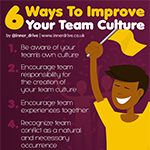
6 ways to develop a winning team culture
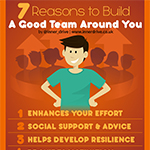
7 reasons to build a good team around you
Football sport psychologists improve your emotional control
Managing your thoughts and emotions whilst you play is often the difference between good and great footballers. Sometimes, emotions are complicated because they can be both a good and a bad thing when you are playing. For example, some footballers play better when their emotions are running high; however, another footballer might lose focus if they are not calm enough. Knowing how your emotions affect you is key.
Controlling emotions isn’t easy, but when done correctly it can add an extra element to your game. It allows you to show the real you.
A football sport psychologist will recognise that players experience a range of emotions whilst playing, which is why they work hard to help footballers learn how to control and use their emotions so that they can play at their best.
Useful Resources
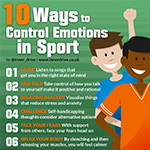
10 top tips to help control your emotions in sport (part 1)

Football sport psychology – Fear of failure

Emotional control and composure in sports – Sport Psychology Today
Football sport psychologists improve your self-talk
The way you talk to yourself is vitally important. How a footballer talks to themselves can affect their concentration, persistence, stress levels and their emotions, which in turn affects their motivation, confidence and overall performance. The way they talk to themselves can also affect their belief that they can always improve and their ability to deal with distractions.
There is so much that you can’t control when you compete. But you can control how you talk to yourself. This can be a vital weapon.
Self-talk is an important tool that everyone can benefit from. The key to overcoming negative self-talk is to recognise that you are doing it, call a stop to it, then say something both helpful and positive. The best footballers do this. This is a skill that can be learnt, just as any football skill is. With the help of a football sport psychologist, this process can be accelerated.
Useful Resources
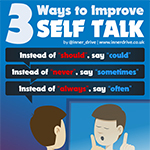
The 3 worst words to say to yourself
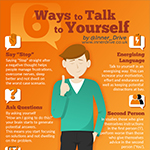
6 ways to improve how you talk to yourself
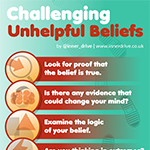
Challenging unhelpful beliefs
Football sport psychologists help with injury
There are two types of players: those that are injured and those that aren’t injured yet. When a major injury occurs in a footballer’s career, it can be a stressful and lonely time. Athletes with poor coping skills can find being injured a very challenging time, which can have a major impact on how they feel, think and behave.
Being injured offers a great opportunity to become both a student of the game and a student of your own game. How well an athlete copes during this time will effect how well they return from the injury.
Injuries can often be a bad time in a footballer’s career, no matter what level they play at. By helping athletes use this time effectively, a football psychologist can help footballers recover from injury quicker and more effectively. It can also make it less stressful and more productive.
Useful Resources

How to help injured athletes

7 ways of developing resilience

The emotional stress of a sports injury – Verywell Fit
Football sport psychologists help to create winning mindsets
Footballers with Growth Mindsets believe that their abilities can be improved. By focusing on learning and improving, they ensure they stay hungry for success and are more likely to develop their abilities. In all walks of life, people with a Growth Mindset tend to learn faster and are more successful than their fixed mindset counterparts. A good sport psychologist will help footballers and teams develop a Growth Mindset, which can boost player development to new levels.
Growth Mindset is more than just thinking you can improve, it’s about using setbacks to consistently learn and develop.
Examples of fixed mindsets (the belief that your abilities and skills can’t be improved) can be seen on the training ground all the time. For example, some footballers will never practice what they’re bad at because they think it will never improve. Others often blame their own or their team’s set-backs on others around them instead of taking responsibility for their bad performance.
One way to help develop a Growth Mindset is to help others see failure as a necessary part of learning. In doing this, you can reduce pessimism, increase self-esteem, and stop players from avoiding challenges.
Useful Resources

How do you actually develop a Growth Mindset?

Football sport psychology for parenting youth footballers
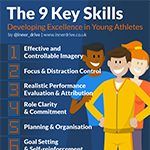
Developing excellence in young athletes
Working with a football sport psychologist
No matter your level, our football sport psychologists will help you reach your full potential by tailoring our work to your specific needs. We have worked with a variety of footballers in the form of one-to-one sessions, as well as in groups workshops. This includes Premiership footballers and England internationals.
At InnerDrive, we leave no stone unturned to help you be the best you can.
Our one-to-one sessions often take place in a footballer’s home, so that they feel comfortable. This also helps ensure that it is discreet and confidential. In these sessions, we explore a variety of strategies to develop a footballer’s ability to perform when it matters most, as well as focusing on their all-round development.
In our group workshops, we work with footballers, parents and coaches in a practical and interactive way to aid understanding of psychological principles and develop strategies to put them into practice.
Useful Resources

Parenting young athletes

How to help your child in sports

One-to-one coaching with a football sport psychologist
FAQ
We have had the pleasure and privilege of working with some of the best footballers in the world. These include senior internationals who have played for England, Scotland, Wales and Japan. We have worked with many players from a range of clubs that include Manchester United, Tottenham, West Ham, Crystal Palace, Watford, and Brighton and Hove Albion.
We work with individuals on a private confidential basis. Sessions take place wherever our clients prefer. This includes at the training ground or at their house.
Here’s one quick tip. Focus on what is most important and what you can control. What three things do you need to do well in order to have a great game? Focusing on these and not on any distractions allows you to get into the zone faster.
You can break down mental toughness into three sections: before, during, and after a match. Before, it is all about good focus in the build-up. During, it is about performing well under pressure. After, it is about reflecting and learning as much as possible from the experience. Each of these areas can be improved.
Yes. Some sport psychologists are great university lecturers and researchers. Unfortunately, this doesn’t always translate into helping footballers play better. We are different. We have worked with hundreds of footballers over many years, and have helped academy footballers earn pro contracts, first team players play better, and helped senior internationals represent their country. So, the answer is: yes, we do.
Get in touch with us here. We are happy to have a chat about what we do and how you could play better football by working with a sport psychologist.
Further reading
Here are some of football psychology blogs we have written:
- What to think about before a match
- A sport psychologist’s guide to player celebration
- A sport psychologist’s guide to fan celebration
- Perfect penalties
- Penalties: myths vs facts
- 8 ways to maximise training
More resources that could be of interest:
The post Sport Psychology for Football appeared first on InnerDrive Dev1.
]]>The post Sport Psychology for Golf appeared first on InnerDrive Dev1.
]]>What is sport psychology?
Sport psychology helps athletes perform better before, during, and after competition by using the latest psychological techniques. The uses of psychology within sport ranges from helping athletes to achieve and maintain optimal performance states, as well as helping athletes with their motivation, concentration and their overall well-being.
Sport psychology draws from a range of fields and a wealth of psychological knowledge to help athletes perform better.
Sport psychology can be the difference between a good golfer and a great golfer.
Sport psychology is becoming increasingly popular within elite and amateur sport. The best athletes recognise that sport psychology is not necessarily just about improving something they are bad at, it is also about making good parts of your game even better, and becoming a better learner at the same time.
Useful Resources

What is sport psychology?

Our work in sport psychology

The secret to success
What does a golf sport psychologist do?
A golf sport psychologist helps golfers to release their full potential and become the best athlete they can. A golf sport psychologist will work both on specific problems that a golfer may be struggling with (e.g, tee pressure, putting pressure, competition nerves, swing consistency) and on improving their overall performance.
Whilst a they may not have a specific problem, elite golfers will work with a sport psychologist to make the shift from being a good golfer to being a great one.
Golf sport psychology isn’t about improving one thing by 100%, it’s normally about improving 100 things by 1%.
The goal of golf psychology is to help you become a better golfer both on and off the course. For example, a golf psychologist can help you develop practice schedules, adopt a more confident stance on the course, as well as help develop elite squad performance pathways.
Useful Resources

American Psychological Association

The psychology of Olympic Champions
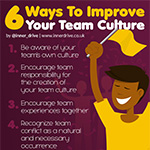
6 ways to develop a winning team culture
How does sport psychology apply to golf?
Having the right mindset and the ability to perform under pressure is vitally important in golf. As Gary Player once said, “A strong mind is one of the key components that separate the great from the good”.
Success in golf is largely due to strength of the mind.
Golfers that play at their best consistently are the golfers that are able to keep their emotions in check, think clearly, make the right decisions, are confident in their abilities to perform at a high level, and are motivated to practice and improve. These are all skills that golf psychology can help with.
Useful Resources

Why does taking a deep breath help?

Golf psychology – Golf Digest

Stop feeling embarrassed on the golf course
How can a sport psychologist help me play better golf?
Research suggests that “sport psychology has a transformational power that elevates performance”. It has also been documented that all athletes in all sports can benefit from sport psychology and especially whilst learning new skills in golf. There are two main ways that a golf sport psychologist can help:
Performing Under Pressure
A golf sport psychologist can help you perform better on the course by improving your:
- Confidence – Whether it be on the 1st tee or the 18th green we can improve how you think and talk to yourself so that you have faith in your ability;
- Concentration – Managing your concentration throughout a round, blocking out distractions and focusing on the right thing at the right time;
- Intensity – Playing at your best for large periods of time;
- Decision Making – Being able to make the correct decisions quickly and clearly when under pressure;
- Consistency – Being able to play each shot consistently under pressure to the best of your ability.
Champion golfers consistently improve and play their best when it really matters.
All round development
As well as playing your best when the pressure is on, a golf sport psychologist can help you develop all round as a golfer by improving your:
- Motivation – Having the drive to practice on and off the course;
- Coping skills – The ability to bounce back from setbacks and poor performance;
- Learning – Learning from your performances to improve for next time;
- Attention – Having a clear focus on what is important in order to improve and play better golf;
- Leadership and playing with others – Effective communication with other golfers.
Useful Resources
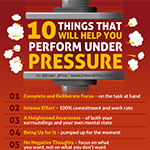
How to perform better under pressure

5 golf psychology tips – Golf Monthly
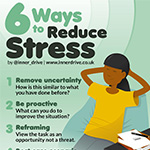
6 ways to reduce stress
How a sport psychologist can improve emotional control
The ability to control both positive and negative thoughts is the difference between a good and a great golfer. Sometimes, emotions are complicated because they can be both a good and a bad thing when you are playing. For example, whilst some golfers put more effort in when they are angry, it may also make them lose focus on the task at hand.
Controlling emotions isn’t easy, but when done correctly, it can add an extra element to your game.
Golf sport psychologists recognise that for some, a round can be an emotional roller-coaster, which is why they work hard to help you control your emotions to play at your best.
Useful Resources
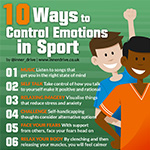
10 top tips to help control your emotions in sport – part 1
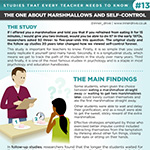
The one about self-control

Overcome emotion in your golf game – Golf Tips
How a sport psychologist can improve self-talk
The golf course can sometimes be a lonely place, meaning that the way you talk to yourself is vitally important.
How you talk to yourself can affect your concentration, persistence, stress levels and your emotions, which in turn affects your performance on and off the golf course. The way you talk to yourself can also affect your belief that you can always improve and your ability to deal with distractions.
There is so much that you can’t control when you compete. But you can control how you talk to yourself, which can be a vital weapon.
Self-talk is an important tool, and everyone can benefit from it. The key to overcoming negative self-talk is to recognise that you are doing it, call a stop to it, then say something both helpful and positive. The best golfers in the world are quick to recognise when they are saying something negative to themselves and quickly stop that thought and think of something that is more helpful to their performance.
Useful Resources
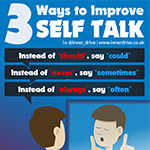
3 worst words to say to yourself

6 ways to improve how you talk to yourself

Challenging unhelpful beliefs
How a sport psychologist can help create a winning mindset
A golfer with a Growth Mindset believes that their mindset is malleable. On the other hand, a golfer who believes that they can only get to a certain level because their ability is set is said to have a fixed mindset. Those with Growth Mindsets tend to learn faster and so tend to be much more successful.
A Growth Mindset is more than just thinking you can improve; it is also about using setbacks to learn and develop.
Examples of golfers with a fixed mindset can be seen both on the range and on the course. Some golfers will not practice what they are bad at, for example hitting long irons, because they think they are just not good at it (and so will only practice what they are good at instead). Other golfers on the course blame set-backs on others around them, luck, the course or the conditions rather than taking responsibility for their bad play.
One way to help develop a Growth Mindset in others is to help them see failure as a necessary part of learning. In doing this, you can reduce pessimism, increase self-esteem and stop golfers avoiding challenges.
Often, particularly good junior golfers, are labelled as being “naturally talented” as opposed to being seen as hard working and good learners. This “labelling” can be detrimental to their growth. To develop a growth mindset in a young golfer it is better to use “purposeful praise” where good processes are praised rather than abilities.
Useful Resources

How do you actually develop a Growth Mindset?

Developing a Growth Mindset in golf

Sergio Garcia and the triumph of a Growth Mindset – Golf Digest
Working with a golf sport psychologist
No matter what your level is, a golf sport psychologist will help you reach your full golfing potential by tailoring their work to your specific needs. We work with golfers both in the form of one-to-one sessions as well as in group sessions.
At InnerDrive, we leave no stone unturned to help you be the best you can.
Our one-to-one sessions take place where the golfer feels most comfortable and are confidential in their nature. In these sessions, we explore a variety of strategies to develop a golfer’s ability to perform when it matters most, as well as their all-round development as a golfer.
In our group workshops, we work with golfers, parents and coaches in practical interactive sessions to aid understanding of psychological principles and develop methods to put these into practice.
Useful Resources

Parenting young athletes

How to help your child in sport

Parenting junior golfers
FAQ
Golfers often speak about the mental game in golf. This tends to encompass their ability to make the correct decisions, concentration, confidence, managing nerves and performing under pressure.
Having a great golf swing will obviously help you play better golf. However, many golfers and golf sport psychologists suggest that the ‘mental game’ can take golfers to the next level. Jack Nicklaus even suggested that “80% of golf is mental”.
Working on your mental game in golf is like working on your swing. You start with the fundamentals of a winning mindset. Then, through effort and practice, your ability to perform better under pressure, practice more effectively and ultimately grow all round as a golfer will improve.
We have been privileged to work with highly skilled amateurs who have played county and national golf. We have also worked with professional golfers who have competed on the European and International tours.
Our work with individuals is private and confidential. One-to-one sessions take place wherever our clients prefer. This includes but is not limited to at practice grounds or at your house.
Try focusing on what’s most important and what you can control when you play. Ask yourself: what three things do I need to do well so that I can play my best? If you can focus on these and nothing else, you will be in the best place to perform.
We help you become a better golfer by breaking it into three sections; before, during and after. Before you play, it is all about your focus and preparation. During a round, it is about performing at your best under pressure. After, it’s about reflecting on your performance and learning from it.
Yes. Often, sport psychologists rely on experience from other sports or from your understanding of golf. We are different. We have worked with numerous golfers with a variety of abilities, from those with high handicaps to elite golfers performing on professional tours.
Further reading
Here are our main golf psychology blogs:
- Develop a Growth Mindset in golf
- Parenting junior golfers
- Stop feeling embarrassed on the golf course
And more of our blogs that could be of interest:
- How good is your first attempt?
- 10 ways to boost motivation
- Build a good team around you
- How to develop resilience
- 8 ways to maximise training
- 7 ways to reduce the fear of failure
And some of our favourite related resources:
The post Sport Psychology for Golf appeared first on InnerDrive Dev1.
]]>